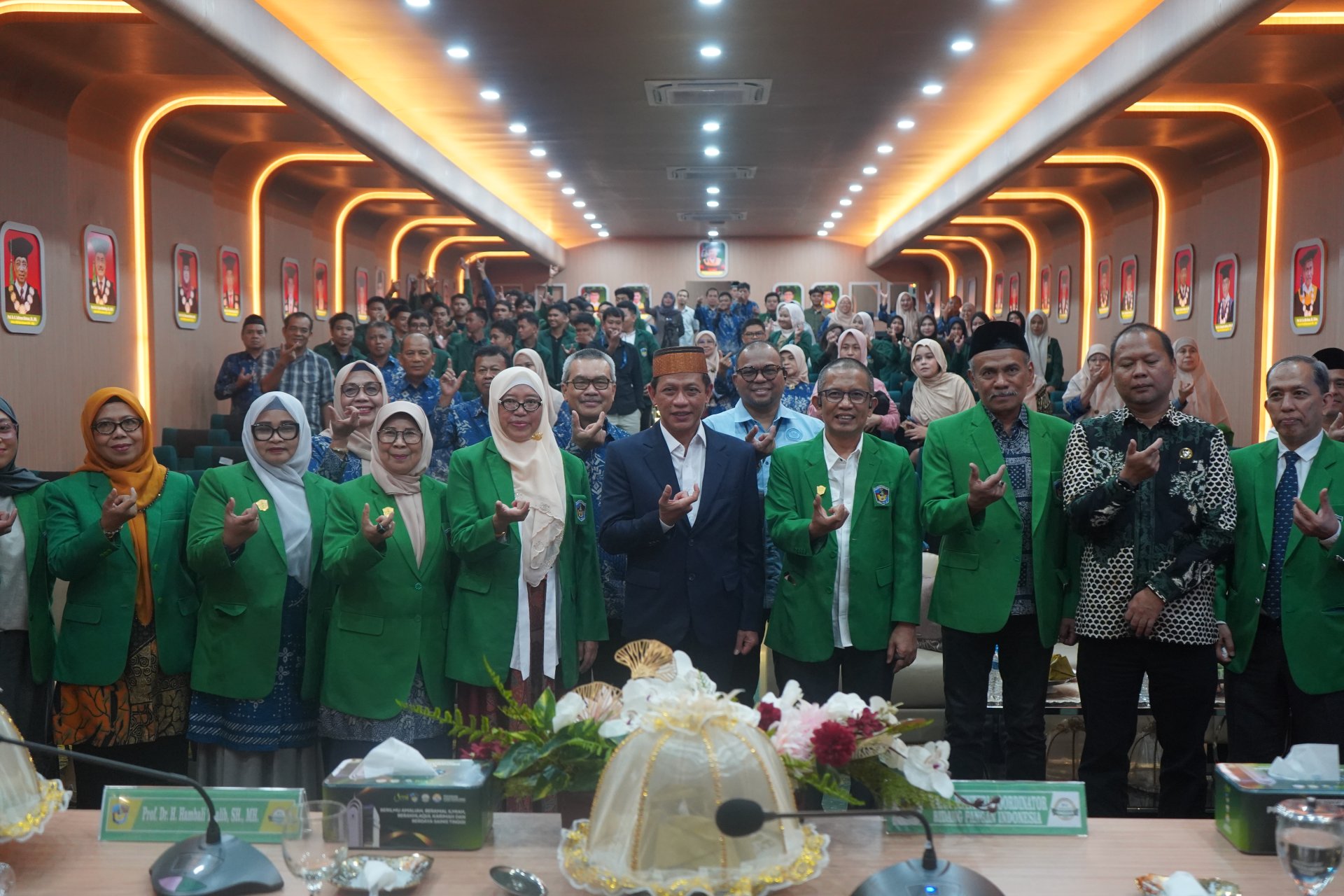
MAKASSAR, FPIK UMI – The Faculty of Fisheries and Marine Science at Universitas Muslim Indonesia (FPIK UMI) strengthened the role of academia in supporting national food security by hosting its 6th National Scientific Seminar (Seminar Ilmiah Nasional or Seminas VI), featuring Dr. Hanif Faisol Nurofiq, S.Hut., M.P., Deputy Coordinating Minister for Food Affairs of the Republic of Indonesia, as the keynote speaker on Saturday, November 21, 2026.
Held at the UMI Postgraduate Hall in Makassar, the seminar carried the theme “Impactful Fisheries and Marine Affairs to Support National Food Security and Economic Independence.” Conducted in a hybrid format, the event brought together approximately 140 participants from 27 institutions, providing a platform for government representatives, academics, and practitioners to discuss the contribution of fisheries and marine resources to food security and community welfare.
The attendance of the Deputy Coordinating Minister for Food Affairs provided an important opportunity to connect national policy priorities with research findings and scientific developments in higher education. Discussions focused on opportunities to advance the fisheries sector, ranging from the provision of nutritious food to improving the income and welfare of coastal communities.
In his presentation, Dr. Hanif Faisol Nurofiq highlighted the need to improve Indonesia’s capture fisheries productivity. He stated that Indonesia’s capture fisheries production reached approximately 7 million tonnes in 2025, despite the country’s substantial marine resource potential.
“These figures indicate that Indonesia’s capture fisheries productivity remains relatively low compared with the potential of its marine resources,” he explained.
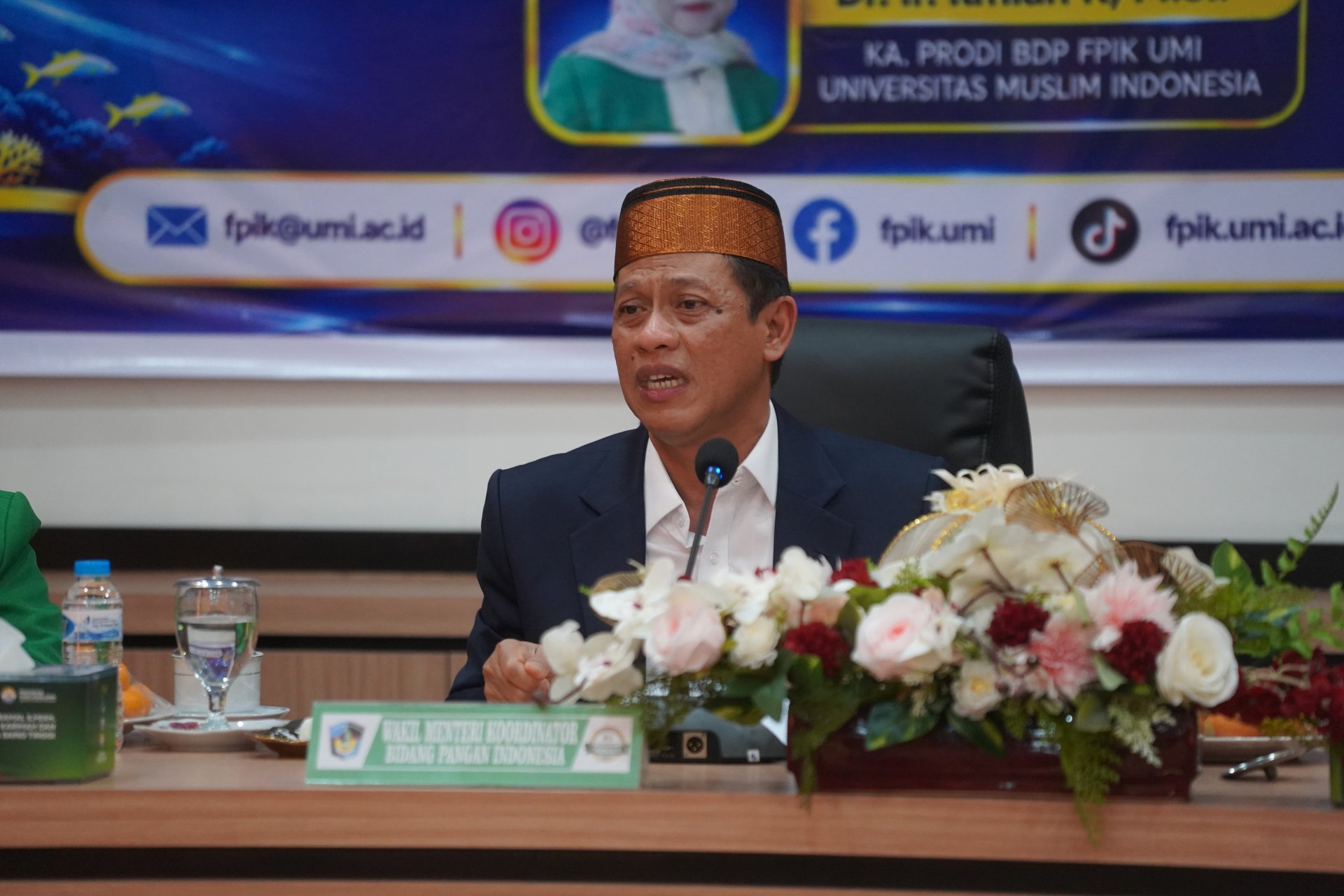
He emphasized that food resources derived from both marine and inland fisheries should receive greater attention in national food security policymaking. The development of these sectors is not only essential to meeting nutritional needs but also contributes to job creation and strengthening the economies of communities whose livelihoods depend on fisheries.
The seminar’s discussions were further enriched by academic perspectives from Indonesia and Malaysia. The speakers included Dr. Shahreza MD Sherif, President of the Malaysian Fisheries Society and a lecturer at the Faculty of Fisheries and Aquaculture Sciences, Universiti Malaysia Terengganu, as well as Prof. Dr. Ir. Danial, M.Si., Professor and Vice Dean I of FPIK UMI.
In the opening remarks delivered on behalf of the Rector of UMI, Vice Rector V, Ir. Hj. Setyawati Yani, S.T., M.T., Ph.D., IPM., ASEAN Eng., emphasized the importance of research and innovation that address the real needs of society. She noted that university research should be translated into applicable technologies, data-driven policy recommendations, and improved working methods that can enhance productivity and public welfare.
She also highlighted the need to strengthen collaboration among universities, government, industry, and communities. Researchers need to understand challenges in the field, while businesses and communities require practical solutions that suit their specific circumstances and needs.
In line with this perspective, Dean of FPIK UMI, Prof. Dr. Ir. Hasnidar, M.S., IPM., emphasized that developing the fisheries and marine sectors requires scientific expertise, technological advancement, and governance that takes environmental carrying capacity into account.
She encouraged the adoption of a blue economy approach that integrates economic activities with the preservation of aquatic ecosystems. Fisheries productivity, food security, and environmental sustainability must be managed in a balanced manner to ensure that aquatic resources continue to benefit future generations.
Through Seminas VI, FPIK UMI provided a platform for policymakers, academics, researchers, and practitioners to engage directly in discussions on the challenges and opportunities facing the fisheries and marine sectors. This cross-institutional gathering is expected to create opportunities for research development and collaboration that respond to the needs of the fisheries sector, while encouraging the application of research findings to strengthen national food security and economic independence.
Since its establishment on June 19, 1987, FPIK UMI has continued to contribute through education, research, and community service in fisheries and marine science. The 6th National Scientific Seminar represents part of this ongoing commitment to advancing impactful scientific knowledge and innovation while strengthening attention to the needs of coastal communities and the national food security agenda.