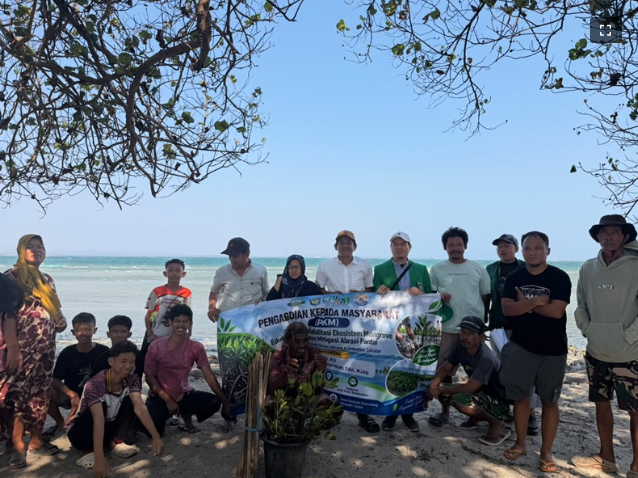
TAKALAR, FPIK UMI — Efforts to safeguard the sustainability of coastal ecosystems continue through community service initiatives conducted by the Faculty of Fisheries and Marine Science (FPIK), Universitas Muslim Indonesia (UMI). In its latest initiative, a team of FPIK UMI lecturers conducted community education and mangrove ecosystem rehabilitation in Puntondo Hamlet, Laikang Village, Mangarabombang District, Takalar Regency, South Sulawesi, as part of efforts to mitigate coastal erosion and conserve coastal resources.
The program, entitled “Education and Mangrove Ecosystem Rehabilitation as an Effort to Mitigate Coastal Erosion in Puntondo Hamlet, Laikang Village, Takalar Regency,” involved local coastal communities and the Bakau Lestari Group as community-level implementation partners.
The community service team was led by Asmidar, S.Kel., M.Si., with Ir. Andi Muhammad Akram, S.Kel., M.Ling. as a team member. The initiative represents the implementation of the Three Pillars of Higher Education (Tridharma Perguruan Tinggi), particularly community service, by applying knowledge and expertise in fisheries, marine science, and environmental management to address coastal challenges.
Mangroves: Natural Coastal Defenses and Habitats for Aquatic Life
The program began with an educational session highlighting the strategic role of mangrove ecosystems in maintaining coastal environmental balance. Participants learned how mangrove vegetation helps reduce wave energy, trap sediments, and provide habitats and nursery grounds for various aquatic organisms.
From the perspective of fisheries and marine science, mangrove ecosystems are closely linked to coastal aquatic productivity. They provide shelter and feeding grounds for numerous organisms while supporting food webs and the sustainability of fisheries resources.
The team also explained the factors contributing to coastal erosion, the impacts of coastal vegetation degradation, and the importance of mangrove rehabilitation as an ecosystem-based approach to mitigation.
Through this educational initiative, community members are expected to gain a deeper understanding that mangrove conservation involves more than protecting trees along the shoreline. It also means safeguarding aquatic habitats, supporting sustainable fisheries resources, and protecting the livelihoods of coastal communities.
Community Participation in Mangrove Rehabilitation
Following the educational session, the lecturers and local residents carried out mangrove rehabilitation activities along the coast of Puntondo Hamlet. Field activities included preparing planting materials, introducing appropriate planting techniques, and planting mangroves together with community members.
Community participation was a key element of the program. Mangrove rehabilitation is not measured solely by the number of seedlings planted, but also by their survival, growth, and eventual development into vegetation capable of performing essential ecological functions.
Residents were therefore encouraged to take an active role in maintaining the seedlings, monitoring their growth, and preventing activities that could damage coastal habitats.
This participatory approach is expected to foster a shared sense of responsibility for coastal ecosystem conservation. Consequently, mangrove rehabilitation can extend beyond the initial planting stage through continued maintenance and regular monitoring.
Strengthening the Capacity of the Bakau Lestari Group
In addition to education and planting activities, the program aimed to strengthen the capacity of the Bakau Lestari Group in sustainably managing mangrove ecosystems.
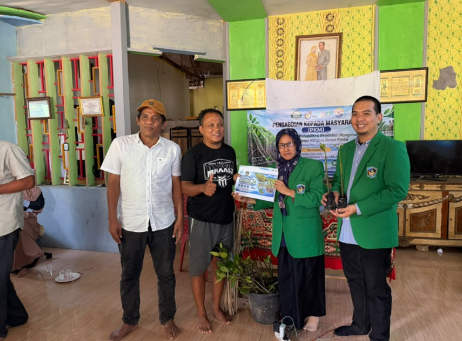
The team introduced a mangrove rehabilitation and maintenance guide designed to serve as both an educational resource and a practical reference for the community group. The guide covers the ecological functions of mangroves, rehabilitation techniques, plant maintenance, and the monitoring of mangrove growth and survival rates.
This assistance is expected to improve the group's ability to continue maintaining and monitoring mangroves independently. With practical knowledge and accessible guidance, community members are expected to become better equipped to protect and sustain mangrove ecosystems in their area.
Mangrove rehabilitation requires a long-term commitment. In addition to routine maintenance, monitoring must consider seedling survival rates, vegetation growth, and the suitability of environmental conditions for mangrove development. These factors are essential to ensuring that rehabilitation efforts deliver lasting ecological benefits.
Building Partnerships for Sustainable Coastal Management
Through this initiative, FPIK UMI reinforces the role of higher education institutions in applying scientific knowledge and expertise in fisheries and marine science to address environmental challenges within local communities.
Collaboration among the lecturers, the Bakau Lestari Group, and coastal residents provides an important foundation for conservation efforts that focus not only on ecosystem restoration but also on strengthening community awareness and capacity in coastal management.
Moving forward, the program is expected to encourage more structured, participatory, and monitoring-based mangrove management practices. These efforts form part of a broader commitment to maintaining coastal ecosystem balance, supporting sustainable fisheries resources, and strengthening the resilience of coastal areas against erosion.
Through this community service initiative, FPIK UMI continues to promote collaboration between higher education, scientific knowledge, and practical action to support sustainable coastal management and long-term environmental conservation.