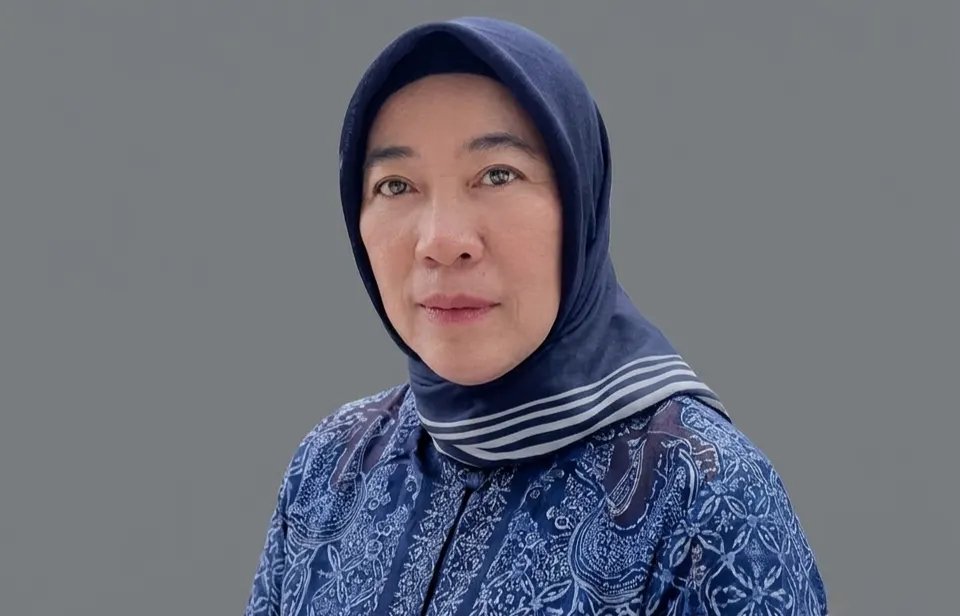
Starting from the Faculty of Fisheries and Marine Sciences at Universitas Muslim Indonesia, Ir. Hj. Hasnawiah Palanna embarked on a professional journey that evolved from administrative and management experience into entrepreneurship. Today, she leads PT Sabina Solusi Pratama, where her work brings together business planning, industry, production machinery, legal compliance, management, and human resource development.
MAKASSAR, umi.ac.id — A company can purchase machinery. It can build a factory. Capital can provide technology. But there is one thing that cannot be built with money alone: people who are capable of making everything work.
This understanding has become one of the central themes in the professional journey of Ir. Hj. Hasnawiah Palanna, an alumna of the Faculty of Fisheries and Marine Sciences at Universitas Muslim Indonesia (FPIK UMI). Her career has not followed an entirely linear path based on the academic discipline she once studied.
From fisheries, she entered the world of administration and management. From there, she moved into business, followed by industry, production machinery, legal compliance, business consulting, and human resource development. Her fields have evolved. Her responsibilities have expanded. Yet one principle has grown increasingly clear: a business that seeks to grow must ensure that its people grow along with it.
Starting with Fisheries at UMI
Hasnawiah is an alumna of the Faculty of Fisheries and Marine Sciences at Universitas Muslim Indonesia, Class of 1992. UMI became one of the early foundations of her professional journey. However, like many alumni, the career path she encountered after leaving university did not always correspond directly to the academic discipline she had studied.
This is one of the realities of the professional world. A degree provides an academic identity. Knowledge provides a foundation. But life presents countless possibilities. Hasnawiah chose to embrace those possibilities by continuing to learn.
From Administration to Management
One of the early chapters of Hasnawiah’s professional journey was her experience working as the rector’s secretary at Sekolah Tinggi Manajemen Industri Indonesia. At first glance, administrative work may seem far removed from entrepreneurship. Yet it is often within such roles that one learns how an organization functions.
Documents must be well organized. Communication must flow effectively. Agendas must be managed. Decisions must be translated into action. And every task requires coordination.
That experience became an important part of her journey toward management and the business world. Because business, at its core, is not simply about selling something. It is about the ability to make many different parts work together as one system.
Entering the World of Entrepreneurship
Hasnawiah’s journey later expanded into various areas of business. She built her experience through a number of companies and business activities, including sectors related to bottled drinking water, production machinery, industrial project consulting, legal compliance, and business management.
One company that has become closely associated with her professional journey is PT Sabina Solusi Pratama. The company’s scope of work reflects a broad business character. It does not simply sell a single product. Rather, it supports business processes from planning through operations.
Business planning.
Building planning.
Production machinery.
Licensing and permits.
Management.
Through to distribution.
In other words, the challenges involved are not merely about asking, “What will be sold?” but rather, “How can a business actually operate and function effectively?”
From Products to Systems
In building an industrial operation, purchasing machinery is relatively easy compared with ensuring that the entire system works.
Machines need operators.
Production requires standards.
Products require legal compliance.
Companies require management.
Management requires people.
And people require competence.
Therefore, the deeper one goes into the business world, the clearer it becomes that a company’s challenges are not merely about products or goods. They are about systems.
This is where Hasnawiah’s experience evolved from managing businesses toward a broader understanding of organizations. A product may be sold once. A well-designed system enables a company to operate effectively and consistently over and over again.
When Machines Are Not Enough
Her experience in the industrial sector has revealed a simple reality: good machinery does not necessarily produce a good company. Expensive technology does not automatically create a productive organization. Machines still depend on people.
Someone has to operate them.
Someone has to maintain them.
Someone has to sell the products.
Someone has to manage the finances.
Someone has to ensure legal compliance.
Someone has to build relationships with customers.
And a leader must ensure that all of these elements move in the same direction.
This is where human resource development takes on an important role.
Machines increase production capacity. People determine the capacity of the company.
From Managing a Business to Growing People
Hasnawiah subsequently strengthened her capabilities through various leadership and management development programs. She participated in leadership training, management programs, team-building activities, sales training, communication programs, and executive capacity development.
These learning experiences demonstrate that becoming an entrepreneur does not mean ceasing to be a learner. On the contrary, the greater the responsibility, the more competencies a leader needs to develop.
A company leader is not responsible only for numbers. They are also responsible for the people who generate those numbers.
This is where one of the central ideas of Hasnawiah’s journey emerges: business is not only about growing a company. It is also about growing the capacity of the people within it.
Human Resources as Business Infrastructure
In business, the term infrastructure usually brings to mind buildings, machinery, networks, or facilities. Yet there is another form of infrastructure that is equally important: human competence.
A company may have buildings, machinery, capital, technology, and even a market. But without people capable of managing them, all those assets lose much of their value.
For this reason, human resources are not merely an administrative component of a company. Human resources are the living infrastructure of an organization.
They think.
They learn.
They adapt.
They communicate.
They create solutions.
And they determine whether a company can survive when circumstances change.
From Entrepreneur to Capacity Builder
Her focus on people subsequently expanded Hasnawiah’s professional journey. She became involved not only in managing companies but also in activities related to training and productivity improvement.
At this point, her business experience took on another dimension. Knowledge gained from running a business could be passed on. Experiences of failure could become lessons. Systems that had once been developed could serve as examples. And other people could gain new capabilities to develop their own businesses.
This is the distinction between simply building a company and contributing to an entrepreneurial ecosystem.
An entrepreneur builds a business. A people developer helps more people acquire the capacity to build.
Learning Throughout the Journey
One of the defining characteristics of Hasnawiah’s journey is her commitment to continuously strengthening her capabilities. The business world changes rapidly.
The way people sell changes.
Technology changes.
Regulations change.
Consumers change.
The way people work also changes.
Therefore, past experience alone is not enough. An entrepreneur must continue learning how to read and respond to change.
The leadership and management training she has undertaken has been part of this ongoing process. Not simply to collect certificates, but to continually renew the way she leads.
Because a company that seeks to keep growing needs leaders who continue to grow as well.
When Experience Returns to Campus
In October 2024, Hasnawiah’s journey once again crossed paths with the campus where she had once studied. The Faculty of Fisheries and Marine Sciences at UMI invited her as one of the speakers at the 2024 National Entrepreneurship Seminar.
The theme of the event was highly relevant to the journey she had built: “Entrepreneurship as a Way of Life for the Millennial Generation.”
She returned to campus no longer as a student, but carrying years of experience.
In front of a generation preparing for its future, an alumnus’s journey takes on a new function: turning experience into knowledge that can be passed on.
Alumni as a Bridge of Experience
Some knowledge comes from books. Some comes from lecturers. And some knowledge can only be gained after years of facing the real world.
Building a business.
Responding to changes in the market.
Managing people.
Dealing with regulations.
Taking risks.
Facing failure.
And trying again.
When alumni bring these experiences back to campus, students gain something that is not always available in the classroom: experience that has been tested by reality.
This is where the relationship between alumni and their alma mater gains strategic value.
Alumni are not merely the products of a university’s education. They can return as a source of education for the next generation.
You Do Not Have to Work in the Exact Field of Your Study
Hasnawiah’s journey also conveys an important message to students. She began her education in the field of fisheries. Yet her professional journey expanded into business, management, industry, legal compliance, and human resource development.
This does not make her fisheries education any less meaningful.
University does not only provide technical knowledge. It also develops the ability to learn, discipline, problem-solving skills, decision-making confidence, and adaptability.
Life after university may take someone into an entirely different field. What matters then is the ability to continue learning.
A study program provides the foundation. Professional life determines how broadly that foundation will be developed.
UMI in Hasnawiah’s Journey
For Universitas Muslim Indonesia, Hasnawiah’s journey represents another form of alumni impact.
Not every alumnus has to become an academic. Not everyone has to become a government official. And not everyone has to work precisely within the field of their original education.
Some choose to build businesses. Create economic activity. Build organizations. Develop people. And share their experiences with the next generation.
In 2024, when FPIK UMI invited her as one of its alumni speakers at the National Entrepreneurship Seminar, the cycle seemed to return to where it began.
Decades earlier, she came to campus to learn. Years later, she returned to campus to share what life had taught her.
From Campus to Impact
Hasnawiah began her higher education journey at the Faculty of Fisheries and Marine Sciences, Universitas Muslim Indonesia. From there, her path expanded into many different fields: administration, management, industry, entrepreneurship, legal compliance, productivity, and human resource development.
Her journey demonstrates that building a company is not simply about accumulating assets. It is not merely about purchasing machinery or increasing sales. Behind every business process, there are always people.
People who must learn.
People who must grow.
People who must be given opportunities.
And people who ultimately determine whether an organization can endure.
For this reason, the growth of a company and the growth of its people should not take place separately. A healthy business is not simply one that becomes larger. A healthy business is one that enables the people within it to grow as well.
From fisheries at UMI, Hasnawiah entered the world of business. Through business, she learned to build systems. Through those systems, she discovered the importance of people. And through years of experience, she returned to share that knowledge with the next generation. From managing businesses to growing people.
From Campus to Impact. (To be continued)