Marine Science Study Program Conducts Review of Stakeholder Satisfaction Survey Results
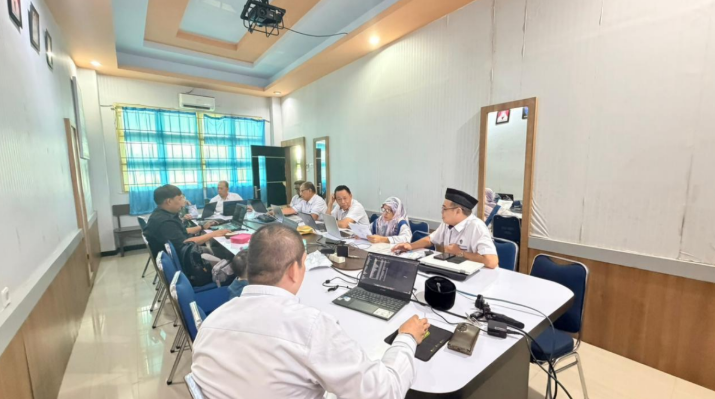
The Marine Science Study Program conducted a periodic review of stakeholder satisfaction survey results as part of the quality assurance system implemented within the Study Program and its respective UPPS. The activity was held on Wednesday, November 13, 2024, at the Marine Science Study Program Seminar Room, starting at 8:30 a.m. until completion.
The review was attended by lecturers of the Marine Science Study Program and focused on evaluating satisfaction survey results and collecting feedback from various stakeholders. The review was conducted to ensure that survey results were not merely used as evaluation data, but also served as a basis for determining follow-up actions and service improvements within the Study Program.
Based on the evaluation results, several areas requiring improvement were identified, along with corresponding follow-up actions, as follows:
1. Students
The evaluation indicated the need to improve the quality of facilities and the responsiveness to students' academic service needs. As a follow-up action, the Marine Science Study Program will improve the quality of facilities and strengthen the responsiveness of academic services by taking students' suggestions and feedback into consideration.
2. Lecturers
The evaluation showed that academic administration processes still require improvement in terms of efficiency, speed, and ease of access. Therefore, the Study Program has established a follow-up action to increase the digitalization of academic administration in order to provide more efficient, faster, and more accessible services.
3. Education Staff
The evaluation indicated that financial management support needs to be increasingly directed toward supporting the implementation of work programs and the improvement of the Study Program's quality. The follow-up action focuses on strengthening financial management and support to provide more optimal assistance for work programs and quality improvement initiatives.
4. Partners
Regarding cooperation with partners, the evaluation showed the need for more consistent communication and monitoring to ensure that collaborative activities are implemented in accordance with established agreements. The Marine Science Study Program will therefore strengthen communication with partners and conduct regular monitoring of cooperation activities.
5. Graduates
The evaluation of graduates indicated that developments in workforce requirements require graduates to strengthen their additional skills and competencies. As a follow-up action, the Study Program will strengthen graduates' skills in accordance with labor market needs through training, certification, and various competency development activities.
6. Graduate Users
Feedback from graduate users indicated that English language proficiency, the use of foreign-language literature, and communication in foreign languages still need to be strengthened to improve graduates' readiness to meet workplace demands. In response, the Study Program will enhance English language training and the use of foreign-language literature and communication as part of efforts to develop students' and graduates' competencies.
Commitment to Continuous Quality Improvement
The results of the review serve as an important basis for the Marine Science Study Program in improving the quality of its services and academic management. Feedback from students, lecturers, education staff, partners, graduates, and graduate users is used to formulate follow-up programs that are relevant to the needs of the Study Program.
Through this activity, the Marine Science Study Program continues to strengthen its quality culture by conducting regular evaluations and ensuring appropriate follow-up actions based on evaluation results. The implementation of these follow-up actions will subsequently be monitored and evaluated to assess the effectiveness of the improvements made.
This review activity reflects the commitment of the Marine Science Study Program to implementing continuous quality assurance and improving the quality of academic services, study program management, graduate competencies, and stakeholder relations.